Device Development
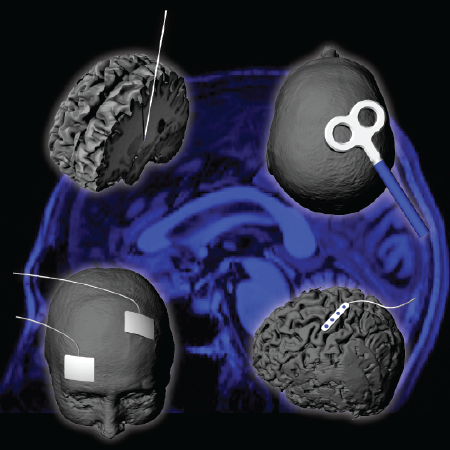
The design space for neuromodulation technology remains unbounded because we still lack a clear understanding of which neural elements to target for improving each symptom of a neurological disorder. We develop new medical device technology leveraging state-of-the-art imaging methods in humans, computational models of the technology, and machine learning algorithms that can rapidly iterate the medical device design space to optimize targeting of stimulation for neurological conditions.
Computer Models
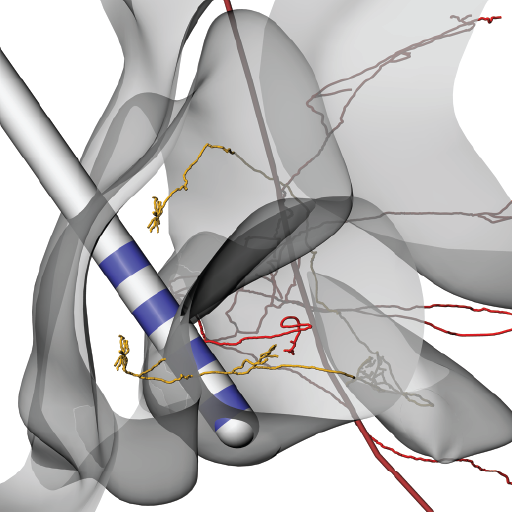
Our lab develops multi-scale computational neuron models to further our understanding of the biophysical and physiological mechanisms of neuromodulation. We couple finite element models of electric fields generated in neural tissue with computational neuron models built from sets of mathematical equations that replicate the biophysical properties of membrane and synapse dynamics. We use these computational tools both retrospectively (e.g. relating clinical outcomes to targeted pathway) and prospectively (e.g. predicting how stimulation will impact clinical outcomes) in humans.
Clinical Outcomes

One of the challenges with evaluation of neuromodulation therapies is the reliance on clinical outcome measures. Our lab develops next generation medical devices that can longitudinally quantify clinical outcome measures objectively, and we then utilize these devices in our clinical trials to more precisely optimize neuromodulation therapies in people with neurological disorders.